
Projects you can implement include AI-powered early warning systems for disasters, chatbots for citizen services in local languages, health diagnostic tools for underserved areas, data-driven agriculture platforms to boost yields and market access, and AI-assisted education for personalized learning. By tailoring these solutions to local needs and emphasizing ethics and transparency, your NGO can drive inclusion, resilience, and sustainable development at the grassroots level.
Harnessing Data for Disaster Preparedness
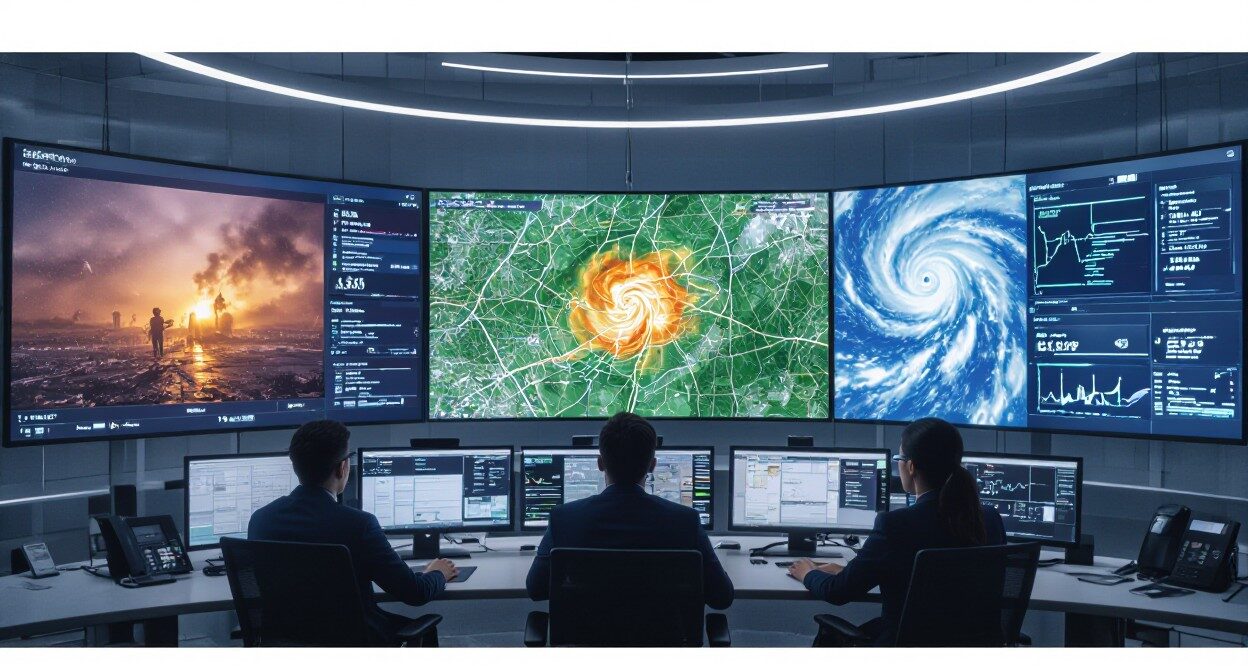
You can fuse satellite imagery, weather feeds, local sensors and community reports to create layered risk maps that guide action. Combining sources like Sentinel-1 SAR, CHIRPS rainfall data and river-forecast outputs (e.g., GloFAS) lets you anticipate hazards with 24–72 hour lead times and target alerts to neighborhoods, schools, or health posts. Practical pilots often pair these models with SMS/IVR and local radio to ensure warnings reach the most vulnerable.
AI-Powered Early Warning Systems
Deploy machine learning models to detect emerging floods, landslides or storm surges by analyzing radar returns, telemetry and short-term weather forecasts; nowcasting techniques can extend warning windows to 24–72 hours for many events. You should integrate automated triggers with human verification and multi-channel dissemination — SMS, community sirens, and local NGOs — so warnings are actionable and reduce false alarms while reaching isolated households.
Predictive Analytics for Community Resilience
Use predictive models to rank households, assets and infrastructure by risk using historical damage records, elevation maps, building types and socioeconomic data. These analytics let you pre-position shelters, prioritize retrofits, and plan evacuation routes; dashboards can highlight the top 10% most at-risk zones for targeted interventions and scenario simulations for 1-in-10 or 1-in-100 year events.
Operationalizing predictive analytics starts with local data collection: damage logs, household surveys and GIS layers (roads, schools, health centers). Apply interpretable models — decision trees or gradient-boosted ensembles — and validate against past events to calibrate vulnerability scores. In practice you should run tabletop exercises with community leaders, update models after each season, and link outputs to procurement and volunteer networks so forecasts translate into concrete pre-positioning of supplies and timely evacuations.
Revolutionizing Health in Underserved Areas
You can deploy AI to bridge long distances between patients and clinicians, turning limited clinic hours into continuous, data-driven care. WHO notes at least half the world lacks full important health coverage, so leveraging tools like on-device models and low-bandwidth teletriage lets your team screen larger populations, prioritize high-risk cases, and reduce unnecessary referrals while working with community health workers to keep care culturally appropriate and locally managed.
AI Diagnostics for Remote Communities
You can implement computer-aided detection (CAD) for chest X-rays—WHO now recommends CAD for TB screening—to catch cases earlier where radiologists are scarce. Other examples include AI retinal screening pilots for diabetic retinopathy and smartphone microscopy that detects malaria parasites; these tools run on modest hardware, let community health workers perform point-of-care screening, and route positive cases promptly to referral networks.
Telehealth Solutions Powered by Machine Learning
You can pair ML-driven triage chatbots in local languages with video consults to triage symptoms, schedule follow-ups, and flag emergencies. FDA-cleared consumer devices (for example, portable ECGs used in remote screening) show how consumer-grade tools integrate with telehealth platforms; your NGO can use similar pipelines to extend specialist reach, reduce travel, and monitor chronic conditions remotely.
Operationally, you should design models that run offline or on edge devices, apply federated learning to protect patient data, and adapt NLP models to local dialects. Train and validate against representative datasets, track metrics like sensitivity and positive predictive value, and build clear referral pathways so ML outputs translate into timely, supervised clinical action at the community level.

Transforming Agriculture Through Data
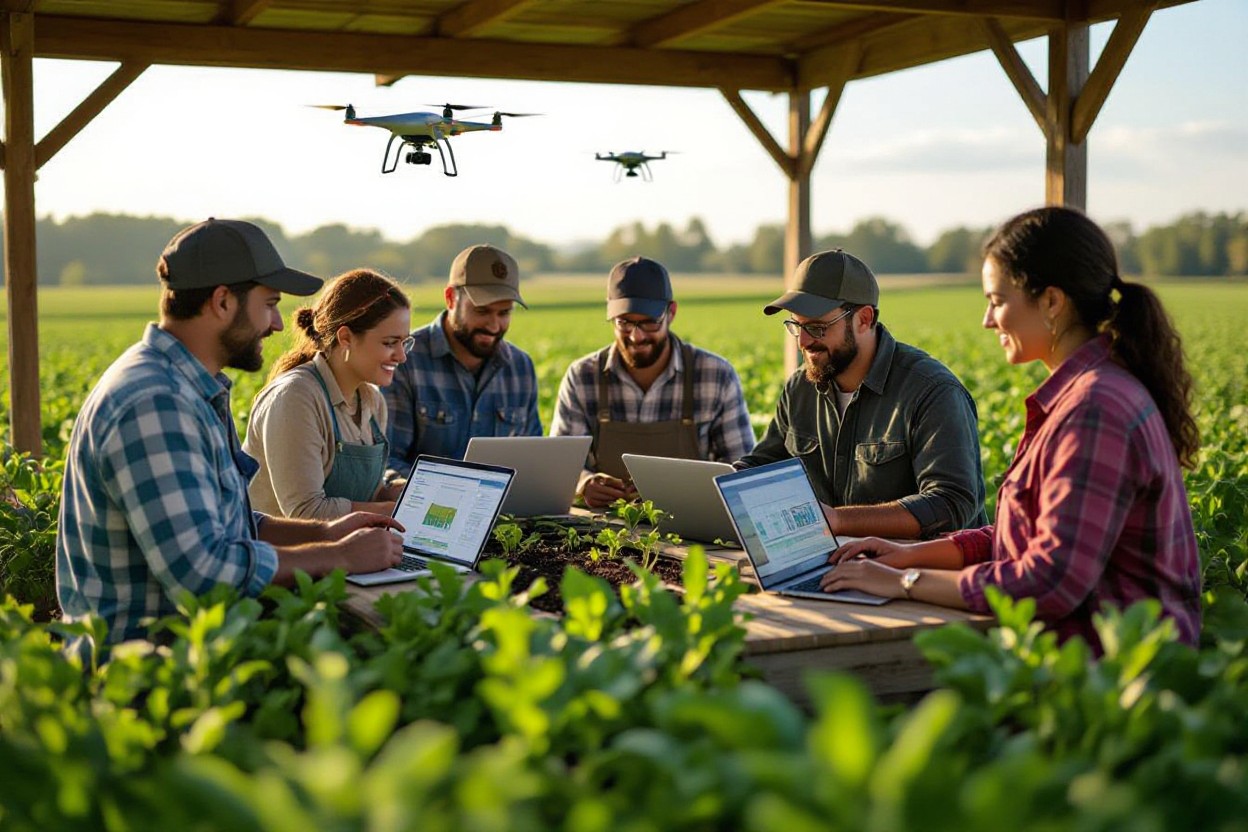
You can turn satellite imagery, IoT soil sensors, and community smartphone surveys into localized recommendations that change farm practice. Machine learning models built on local weather and historical yields have driven 10–25% yield gains and 20–30% input savings in pilot projects across South Asia and sub‑Saharan Africa. Pairing low‑cost sensors with extension workers lets your NGO deliver prescriptive alerts, seasonal forecasts, and crop‑health maps that farmers can act on immediately.
Precision Farming Techniques
By combining drone imagery, NDVI satellite indices and soil‑moisture probes, you can implement variable‑rate seeding and fertilization to apply inputs only where needed. Computer vision from weekly drone or smartphone images can detect pests and diseases early, triggering targeted IPM advisories; field trials report pesticide reductions around 25%. Deliver recommendations via SMS, IVR, or simple Android apps in local languages so your guidance reaches farmers with limited connectivity.
Market Access Platforms for Farmers
Market platforms using AI match your farmers to buyers, forecast prices, and optimize logistics to shorten the path to market. Models like ITC’s e‑Choupal (reaching ~4 million farmers) and Kenya’s M‑Farm increased price transparency and bargaining power for smallholders. You can layer smartphone‑based quality grading, demand forecasting, and buyer integration to boost incomes and reduce sale delays.
Begin by mapping buyer demand and building simple data pipelines: SMS/USSD for feature phones, an Android app for smartphones, and cloud ML for forecasting. Aggregate orders to negotiate bulk contracts, enable digital payments and warehouse receipts, and link to transport providers to lower logistics costs. Implement smartphone computer‑vision grading to reduce disputes—pilots often show 10–20% price uplifts—and track adoption rate, median price received, and post‑harvest loss (often 20–40%) to measure impact and iterate.
Enhancing Education with AI-Driven Solutions
You can use AI to close learning gaps by combining adaptive content, multilingual chatbots, and diagnostics that spotlight weak competencies. Adaptive engines analyze thousands of item-level responses to adjust difficulty and pacing, while offline-capable models let you deploy in low-connectivity schools. NGOs that integrate local curricula, teacher dashboards, and community feedback typically see faster targeting of interventions and clearer allocation of limited resources across classrooms.
Personalized Learning Systems
Personalized systems recommend lessons, practice problems, and videos based on each learner’s mastery profile, allowing you to group students by specific skills rather than age. By tracking assessment data and time-on-task, these platforms surface who needs remediation versus enrichment, support blended classroom models with targeted teacher prompts, and can sync periodically to conserve bandwidth in remote deployments.
AI Tutors and Learning Assistants
AI tutors offer on-demand Q&A, formative feedback, and scaffolded hints through chat or voice, reducing repetitive workload for teachers while giving students immediate input. You can deploy chatbots in local languages to handle routine queries, grade short responses against rubrics, and free educators to focus on mentorship and higher-order thinking activities.
For implementation, consider hybrid systems that combine rule-based flows with transformer models fine-tuned on local text or audio to improve accuracy in community languages. Run inference on low-cost devices or local servers to protect privacy, use open-source frameworks like Rasa or Hugging Face to cut licensing costs, and validate impact with pre/post assessments and classroom observations so you can iteratively tune content and measure learning gains.
Cultivating Fairness and Accountability in AI
You can embed fairness and accountability into every project by combining technical audits, community governance, and transparency practices. Run model audits using tools like IBM AI Fairness 360, Microsoft Fairlearn or Google’s What‑If Tool, publish simple model cards for community review, and set measurable targets (for example, aim for under a 10% performance gap across demographic slices). Case studies—such as dermatology AIs showing lower accuracy on darker skin—illustrate why local validation and stakeholder oversight must be routine.
Bias Detection Tools for Community Health
Use bias detection to evaluate diagnostic tools across age, gender, ethnicity and geography by comparing sensitivity, specificity and AUC per group. Implement open‑source toolkits (AIF360, Fairlearn) to compute metrics like demographic parity and equalized odds, then visualize disparities with dashboards. Collect at least several hundred labeled local records where possible, and prioritize reweighting, augmentation or local retraining when you see systematic drops in performance for underserved subgroups.
Ethical AI Workshops and Engagement
Design participatory workshops of 1–2 days for cohorts of 15–30 stakeholders to co‑define harms, consent practices and data stewardship. Combine short lectures with hands‑on labs using What‑If Tool or simple model demos in local languages, then form a community review group to sign off on deployment plans. Practical case studies—such as a chatbot for citizen services or an agricultural recommender—help participants translate ethics into concrete safeguards.
For deeper impact, structure the workshop around four modules: (1) local case mapping and harm analysis; (2) basic fairness metrics and a live audit demo; (3) co‑design of consent, data minimization and redress mechanisms; (4) governance next steps and role assignments. Provide templates (model cards, simple DPIA forms) and follow up with mentorship sessions so you can track implementation. Measure learning and trust changes with pre/post surveys and publish a short community report to maintain accountability.
Summing up
Now you can implement AI projects in your community, such as early warning systems for disasters, multilingual chatbots for local services, AI diagnostics for healthcare, data-driven agriculture and market tools, personalized learning platforms, bias-detection for fair programs, and community workshops on AI ethics and accountability—each tailored to local needs to increase inclusion, resilience, and sustainable development while building local capacity and ensuring transparency and accountability.
