Welcome to NGOs.AI – your trusted resource for navigating the exciting, sometimes complex, world of artificial intelligence (AI) for social impact. For nonprofit leaders, program managers, fundraisers, and communications staff worldwide, including those in the Global South, understanding and leveraging AI isn’t just about staying current; it’s about amplifying your mission and creating greater positive change. This guide demystifies AI, explores its practical applications for NGOs, and helps you adopt it responsibly and ethically.
At its core, AI refers to computer systems designed to perform tasks that typically require human intelligence. Think of AI as a sophisticated assistant that can learn, understand, reason, and adapt. It’s not magic, nor is it a sentient being from a science fiction movie. Instead, it’s a collection of advanced algorithms and data processing techniques that allow machines to identify patterns, make predictions, and even generate creative content.
Consider AI as a multi-talented volunteer. This volunteer never sleeps, can process vast amounts of information in seconds, and can learn from every interaction. However, this volunteer also needs clear instructions, can sometimes make educated guesses that aren’t quite right (like a human with limited information), and lacks genuine human empathy – though it can be programmed to simulate helpful responses.
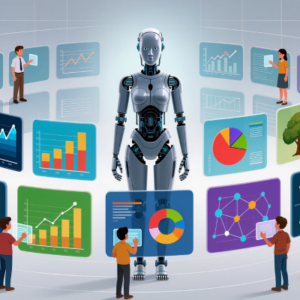
For NGOs, AI isn’t about replacing human connection; it’s about enhancing it. It’s about automating mundane tasks to free up staff for more impactful work, gaining deeper insights from your data, and reaching your beneficiaries and supporters more effectively.
In exploring the transformative potential of AI chatbots for NGO websites, it is essential to consider their broader implications in the nonprofit sector. A related article that delves into how AI can empower NGOs to make smarter decisions is available at From Data to Action: How AI Helps NGOs Make Smarter Decisions. This resource highlights various use cases and benefits of AI technologies, illustrating how they can enhance operational efficiency and improve decision-making processes within NGOs.
Practical AI Applications for NGOs
The potential for AI tools for NGOs spans nearly every facet of nonprofit operations. From streamlining communications to optimizing fundraising strategies and improving program delivery, AI offers a wealth of opportunities.
Enhancing Communications and Engagement
AI can revolutionize how NGOs communicate with their audiences, stakeholders, and beneficiaries.
Personalized Outreach and Storytelling
- Targeted Messaging: AI algorithms can analyze donor or beneficiary data (with strict privacy protocols, of course) to understand individual preferences and behaviors. This allows NGOs to craft highly personalized messages that resonate more deeply, encouraging engagement and support. Imagine sending a fundraising appeal tailored specifically to a donor’s previous giving history or interest area, rather than a generic mass email.
- Content Generation: AI language models can assist in drafting website copy, social media posts, email newsletters, and even parts of grant proposals. While human oversight is crucial for tone and accuracy, AI can significantly reduce the time spent on initial content creation, freeing up communicators to focus on strategic messaging and human-centric storytelling.
- Language Translation: For NGOs operating internationally or serving diverse communities, AI-powered translation tools can bridge language barriers, making information accessible to a wider audience. This is particularly valuable for emergency response, educational materials, and advocacy campaigns in multiple languages.
Chatbots for Instant Support and Information
- 24/7 Information Access: AI chatbots can provide immediate answers to frequently asked questions about your organization, programs, how to donate, or how to volunteer. This reduces the burden on staff and ensures constituents can get information anytime, anywhere.
- Emergency Response: In crises, chatbots can disseminate critical updates, gather information from affected populations (e.g., assessing needs), and guide individuals to necessary resources quickly.
- Donor & Volunteer FAQs: Automating responses to common queries about donations, tax receipts, or volunteering processes frees up staff time for more complex donor relations and volunteer management.
Streamlining Fundraising and Development
Fundraising is the lifeblood of most nonprofits, and AI offers powerful tools to optimize these efforts, ensuring sustainability.
Donor Prospecting and Relationship Management
- Predictive Analytics for Giving: AI can analyze historical giving data, demographic information, and external trends to identify individuals or organizations most likely to donate, and even predict potential giving amounts. This allows fundraisers to focus their efforts on the highest-potential prospects.
- Identification of Major Donors: By flagging patterns in wealth indicators, philanthropic interests, and previous engagements, AI can help identify potential major donors, enabling more strategic cultivation. This saves valuable time that would otherwise be spent on less promising leads.
- Engagement Scoring: AI can score donor engagement based on interactions (email opens, website visits, event attendance), helping organizations understand who is most connected and ripe for deeper cultivation.
Grant Writing Support
- Research Assistance: AI can rapidly search vast databases for relevant grant opportunities that align with your NGO’s mission and programs, saving countless hours of manual research.
- Drafting and Editing: While not a replacement for human grant writers, AI can help draft preliminary sections, summarize project details, and refine language for clarity and conciseness, accelerating the grant writing process.
Optimizing Program Delivery and Impact Measurement
AI can be a game-changer in how NGOs implement their programs and measure their effectiveness, leading to greater impact.
Data Analysis for Program Insights
- Impact Monitoring and Evaluation (M&E): AI can analyze large datasets from program activities, surveys, and beneficiary feedback to identify trends, measure outcomes, and demonstrate impact more effectively. This goes beyond simple statistics, revealing deeper correlations and insights.
- Early Warning Systems: In areas like disaster relief or public health, AI can analyze real-time data (e.g., weather patterns, disease outbreaks, social media sentiment) to predict potential crises and allow for proactive intervention.
- Personalized Service Delivery: For educational or health programs, AI can adapt content or recommendations based on an individual’s progress or needs, much like a personalized tutor or health coach.
Resource Allocation and Logistics
- Supply Chain Optimization: For NGOs involved in humanitarian aid or distribution, AI can optimize logistics, predict demand, and manage inventory to ensure resources reach those in need efficiently and reduce waste.
- Volunteer Management: AI can help match volunteers with suitable roles based on skills, availability, and interests, improving volunteer satisfaction and program effectiveness.
The Benefits of AI Adoption for NGOs
The advantages of embracing AI for NGOs are compelling, offering tangible improvements across various operational areas.
Increased Efficiency and Productivity
AI can automate repetitive, time-consuming tasks, freeing up valuable human resources. This means staff can dedicate more time to strategic thinking, direct beneficiary interaction, relationship building, and other complex activities that require human judgment and empathy. It’s like having an army of tireless virtual assistants.
Enhanced Decision-Making
With AI’s ability to analyze vast quantities of data and identify complex patterns, NGOs can gain deeper insights into their operations, donor behavior, program effectiveness, and societal needs. This data-driven approach leads to more informed and strategic decisions, maximizing impact.
Expanded Reach and Accessibility
AI tools, especially those related to content generation and translation, can help NGOs communicate their message and deliver services to a broader, more diverse audience, including those in remote areas or speaking different languages. This democratizes access to information and support.
Greater Impact and Sustainability
By optimizing operations, predicting needs, and improving fundraising, ethical AI adoption can lead to more effective programs, better resource utilization, and stronger financial stability for NGOs, ultimately contributing to a more sustainable and impactful mission.
Risks, Ethical Considerations, and Limitations of AI
While the promise of AI for social impact is immense, it’s crucial for NGOs to approach its adoption with caution, fully understanding the inherent risks and ethical considerations. Think of AI as a powerful magnifying glass: it can illuminate crucial details, but it can also distort or even burn if not used carefully and responsibly.
Bias in Data and Algorithms
- Reinforcement of Existing Inequalities: AI systems learn from data. If that data reflects societal biases (e.g., gender, race, socioeconomic status), the AI will perpetuate and even amplify those biases. For instance, an AI designed to identify beneficiaries for support might inadvertently deprioritize certain groups if its training data is skewed, leading to discriminatory outcomes.
- Consequences of Biased Outputs: Biased AI can lead to inequitable resource allocation, unfair targeting in campaigns, or inaccurate assessments of vulnerability, directly harming the communities NGOs serve.
Privacy and Data Security
- Sensitive Information: NGOs often handle highly sensitive personal information about beneficiaries, donors, and staff. Relying on AI tools requires robust data security measures to protect this data from breaches, misuse, or unauthorized access.
- Compliance with Regulations: Adhering to data privacy regulations (e.g., GDPR, local laws) is paramount. NGOs must understand how AI tools process and store data to ensure compliance and maintain trust.
Lack of Transparency and Accountability
- “Black Box” Problem: Many advanced AI models operate as “black boxes,” meaning it’s difficult to understand exactly how they arrive at their conclusions or decisions. This lack of transparency can make it challenging to identify and rectify errors or biases.
- Whose Responsibility When AI Makes a Mistake? Establishing clear lines of accountability for AI-driven decisions is crucial. If an AI tool provides incorrect information or makes an inappropriate recommendation, who is responsible?
Job Displacement and Skill Gaps
- Automation Concerns: While AI aims to automate tasks, not jobs, some roles’ functions may change significantly. NGOs need to plan for reskilling and upskilling staff to adapt to AI-enhanced workflows.
- Need for New Skills: Adopting AI requires new skills within the organization, such as data literacy, AI ethics comprehension, and the ability to manage and interpret AI outputs.
Over-reliance and Loss of Human Touch
- Ethical Oversight: While AI can assist, human ethical oversight and judgment remain indispensable, particularly in sensitive areas like beneficiary support or advocacy.
- Maintaining Empathy: The core of NGO work is human connection and empathy. Over-reliance on AI could inadvertently diminish the human touch, leading to a mechanistic approach that alienates beneficiaries or supporters.
- Critical Thinking Erosion: Staff might become less critical of AI-generated content or insights if they blindly trust the technology.
In exploring the transformative impact of AI chatbots on NGO websites, it is essential to consider how these technologies can enhance communication and engagement with stakeholders. A related article discusses the broader implications of AI in the humanitarian sector, highlighting how organizations are leveraging technology for positive change. You can read more about this in the article on AI for Good, which provides insights into the innovative ways NGOs are utilizing technology to improve their outreach and effectiveness.
Best Practices for Ethical AI Adoption in NGOs
Navigating the AI landscape requires a thoughtful and strategic approach. Here are foundational best practices for NGOs looking to integrate AI responsibly.
Start Small and Iterate
Don’t aim for a complete AI overhaul from day one. Begin with pilot projects focused on specific pain points and relatively low-risk applications. Learn from these initial implementations, gather feedback, and iterate before scaling up. This measured approach reduces risk and builds internal confidence.
Prioritize Data Privacy and Security
Implement robust data governance frameworks. Ensure all data used for AI training or processing is anonymized or pseudonymized where possible. Comply strictly with all relevant data protection laws and communicate transparently with stakeholders about how their data is being used. Conduct regular security audits of all AI tools and platforms.
Emphasize Human Oversight and Ethical Guidelines
AI should augment human capabilities, not replace critical human judgment. Establish clear ethical guidelines for AI use, including principles around fairness, accountability, and transparency. Train staff to critically evaluate AI outputs, understand its limitations, and intervene when necessary. Never let AI make decisions that require human empathy or ethical reasoning without human review.
Invest in Training and Capacity Building
Equip your staff with the knowledge and skills to understand, operate, and critically assess AI tools. This includes basic data literacy, understanding AI bias, and developing new workflows that integrate AI effectively. Capacity building fosters internal expertise and confidence.
Vendor Due Diligence for AI Tools
When selecting third-party AI tools or services, thoroughly vet vendors. Ask critical questions about their data privacy policies, security measures, bias mitigation strategies, transparency of algorithms, and support structures. Prioritize vendors who demonstrate a strong commitment to ethical AI and social impact.
Engage Stakeholders and Be Transparent
Fostering trust is paramount. Be transparent with beneficiaries, donors, and staff about how your organization is using AI. Explain the benefits, the safeguards in place, and the limitations. Gather feedback from affected stakeholders to ensure AI implementation is meeting their needs respectfully and effectively.
Understand the “Why”
Before adopting any AI tool, clearly define the problem you’re trying to solve and how AI specifically addresses it. Avoid adopting AI just for the sake of it. A clear “why” ensures that AI implementation is purposeful and delivers tangible value to your mission.
AI chatbots are transforming the way NGOs interact with their audiences, providing immediate support and information to volunteers and donors alike. For organizations looking to enhance their volunteer management strategies, exploring the benefits of AI can be particularly valuable. A related article discusses how AI can improve volunteer engagement and streamline management processes, making it a great resource for NGOs aiming to optimize their operations. You can read more about this in the article on enhancing volunteer management with AI for smarter engagement here.
Frequently Asked Questions (FAQs) about AI for NGOs
Q: Do I need a technical background to use AI in my NGO?
A: No, not necessarily. Many AI tools are becoming increasingly user-friendly, with intuitive interfaces that don’t require coding knowledge. However, having staff with strong data literacy and an understanding of AI’s capabilities and limitations is beneficial for successful adoption.
Q: Is AI expensive for small or medium-sized NGOs?
A: The cost varies significantly depending on the AI tool and its complexity. Many AI tools offer free tiers or affordable subscription models. Starting with open-source tools or those with low initial investments can be a cost-effective way to experiment with AI before committing to more expensive solutions. Focus on ROI – what value does the AI bring compared to its cost?
Q: How can NGOs in the Global South leverage AI when internet access is limited?
A: This is a critical challenge. Where connectivity is an issue, NGOs might focus on AI applications that can function offline or semi-offline after initial data synchronization. Examples include edge computing for data analysis on devices, or leveraging AI for planning and resource allocation in headquarters, which then informs local, offline interventions. Advocacy for improved digital infrastructure also plays a role.
Q: How can I ensure AI doesn’t perpetuate biases against the communities my NGO serves?
A: This requires a multi-pronged approach:
- Diverse Data: Strive to train AI models with diverse, representative, and unbiased datasets.
- Bias Detection Tools: Utilize tools that can identify and flag potential biases in AI models.
- Human Review: Always incorporate human oversight to review AI outputs, especially for critical decisions affecting beneficiaries.
- Community Engagement: Involve community members in the design and evaluation of AI systems that will impact them.
- Ethical Frameworks: Adopt and adhere to clear ethical AI guidelines.
Q: What’s the first step for an NGO looking to explore AI?
A: The best first step is education. Read articles like this, attend webinars, and identify a specific challenge or bottleneck within your organization that AI might help solve. Then, research simple, existing AI solutions (like chatbots for FAQs or AI writing assistants) that could address that particular challenge as a pilot project. Don’t be afraid to experiment!
Key Takeaways
AI is not a silver bullet, but it is a powerful catalyst for change within the nonprofit sector. By embracing ethical AI for NGOs, your organization can achieve greater efficiency, make more informed decisions, expand its reach, and ultimately, amplify its positive impact. Remember, AI is a tool – and like any tool, its effectiveness depends on how it’s wielded. With careful planning, ethical considerations, and a commitment to human oversight, AI can become an invaluable asset in solving some of the world’s most pressing challenges.
NGOs.AI is dedicated to guiding you on this journey, providing practical insights and fostering a community of practice where knowledge and ethical principles are shared. Your mission matters, and AI can help you fulfill it more effectively than ever before.
FAQs
What are AI chatbots and how do they work on NGO websites?
AI chatbots are software programs that use artificial intelligence to simulate human conversation. On NGO websites, they interact with visitors by answering questions, providing information, and guiding users through services, often using natural language processing to understand and respond to inquiries in real time.
What are common use cases of AI chatbots for NGOs?
Common use cases include answering frequently asked questions, assisting with donation processes, providing information about programs and events, helping with volunteer sign-ups, and offering support for beneficiaries seeking assistance or resources.
How can AI chatbots benefit NGOs?
AI chatbots can improve user engagement, provide 24/7 support, reduce the workload on staff, increase efficiency in handling inquiries, and enhance the overall user experience on NGO websites, ultimately helping NGOs to better serve their communities and supporters.
Are AI chatbots customizable for different NGO needs?
Yes, AI chatbots can be customized to fit the specific goals, language preferences, and operational requirements of different NGOs. They can be programmed with tailored responses, integrated with existing databases, and designed to reflect the NGO’s branding and communication style.
What are the challenges NGOs might face when implementing AI chatbots?
Challenges include the initial cost and technical expertise required for setup, ensuring data privacy and security, maintaining chatbot accuracy and relevance, and addressing complex or sensitive inquiries that may require human intervention.